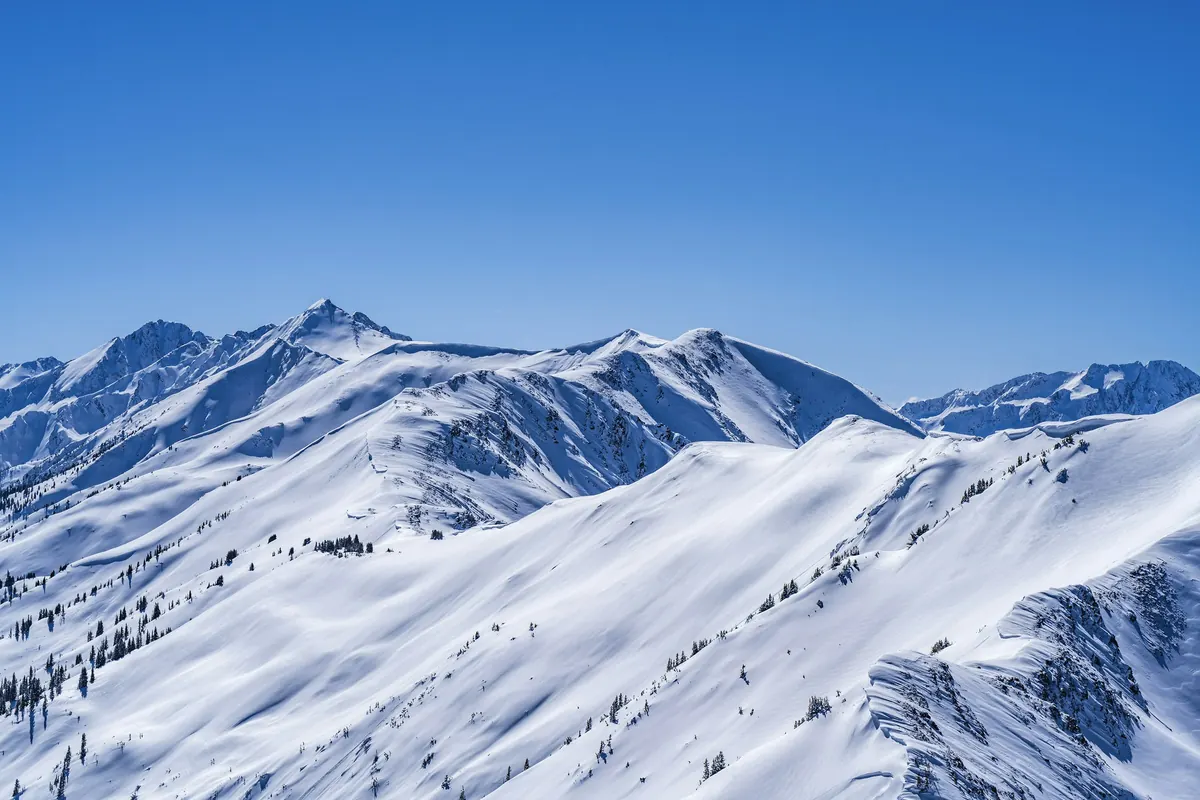
Most private flights end at an airport you hardly notice. Aspen is different. Aspen/Pitkin County Airport (ASE) sits about three miles from town at 7,820 feet, in a valley with mountains close on three sides. It handles airline service, heavy private traffic in ski season and summer, and holiday weeks when the ramp is full. When it works, it is hard to beat: you can be in town about ten minutes after you land. When it does not, the difference between a smooth trip and a long evening is the plan made before you left.
Altitude changes the arithmetic
At 7,820 feet the air is noticeably thinner than at sea level, and thin air affects both engines and wings. An aircraft needs a longer takeoff run and climbs more slowly once it is airborne. Warm weather makes the effect stronger: on a summer afternoon the airport behaves as if it were thousands of feet higher, which pilots describe as high density altitude.
For travelers, this shows up in three ways. First, an aircraft may not be able to leave Aspen with every seat filled, every bag aboard and full fuel at the same time, especially in summer. Second, a longer nonstop trip out of Aspen can need a fuel stop that the same aircraft would not need from a sea-level airport. Third, operators may prefer, or require, departures in the cooler part of the day.
None of this is unusual for the operators who fly here regularly. It is the reason the aircraft category matters more at Aspen than at most airports. A jet that is comfortable on a given route at sea level may be tight on the same route from Aspen, so when we compare options we look at performance out of Aspen, not just range on a brochure. Our aircraft guide sets out what each category can do.
Terrain, approaches and daylight
Aspen lies in the Roaring Fork Valley, and arrivals and departures are designed around the mountains. The approach is steeper than at a typical airport, the procedures are more demanding, and landing needs better weather than at most airports. Low cloud or steady snow that would barely slow traffic at a lowland airport can stop arrivals at Aspen for hours.
Because of this, many operators require their crews to complete training specific to Aspen, or to have recent experience there, before they fly in. Some only accept Aspen arrivals in daylight. In December the sun is behind the mountains before 5 p.m., which matters for flights from the East Coast. Leave New York at 1 p.m. on a flight of about four and a half hours and you land around 3:30 p.m. Aspen time, with light to spare. Leave at 3 p.m. and you may not.
Seasons, congestion and the ramp
Traffic at Aspen follows the calendar. The weeks around Christmas and New Year's, Presidents' Day week and the March spring breaks bring heavy private traffic, and summer has its own peaks around the Fourth of July and the festival weeks. On the busiest days, arrivals can be metered, and parking space on the ramp runs out.
In peak periods, parking at Aspen has required reservations. An aircraft without a space can still land and drop you off, then reposition to another airport, such as Rifle or Eagle County, and come back for your return. Repositioning is not free: each extra leg adds flight time, landing fees and crew time. A quote that assumes the aircraft can stay at Aspen all week may change if the ramp is full, so we confirm parking assumptions before you book and tell you when a drop-and-reposition plan is likely.
Winter also brings de-icing. When snow or frost covers the wings, the aircraft is de-iced before departure, which takes time and is billed at cost by the service provider. Build a little slack into departure days and it rarely matters.
Rules that change
Aspen's limits on aircraft size and weight, ramp space and late-night operations have been adjusted over the years, through runway work, safety reviews and local decisions. A rule that applied two winters ago may not apply now, and the reverse is also true. We check the current notices for your travel dates rather than relying on memory, and if your preferred aircraft is affected, we say so plainly and offer an alternative.
Two examples
In winter, a family of six flying from Teterboro on the Saturday before Christmas in a super-midsize jet might leave at 9 a.m. and land at about 11:30 a.m. Aspen time, after roughly four and a half hours in the air. That leaves the afternoon as margin for de-icing, a slow flow into Aspen or a short hold for snow, with Eagle County planned as the alternate.
In summer, a group of eight heading home to New York from Aspen in early July faces a different limit. On a hot afternoon, a midsize jet may not be able to take everyone, their bags and enough fuel for a nonstop flight. A morning departure, a larger aircraft or a planned fuel stop solves it, and the time to choose is when you book, not on the ramp.
ASE at a glance
| Item | Detail |
|---|---|
| Field elevation | 7,820 ft |
| Runway | One runway, about 8,000 ft |
| Distance to downtown | About 3 miles, roughly ten minutes by car |
| Usual alternates | Eagle County (EGE), Rifle (RIL), Grand Junction (GJT) |
| Busiest periods | Christmas to New Year's, Presidents' Day week, March, the Fourth of July |
| Common operator rules | Crew training specific to Aspen; daylight-only arrivals for some operators |
What it means for your trip
- Choose the aircraft for Aspen, not just for the distance. From the East Coast or South Florida, a super-midsize jet usually flies nonstop with room for bags. Smaller jets may need a fuel stop westbound in winter.
- Land early in the day. Morning and midday arrivals leave room for delays, de-icing and daylight limits.
- Agree the alternate before you leave. Eagle County, Rifle and Grand Junction each have trade-offs; our guide to backup plans compares them.
- Book holiday weeks early. Aircraft and ramp space are limited, and early requests get the widest choice.
- Expect straight answers. If the forecast is poor, we will tell you early and propose a plan, such as an earlier departure or a planned arrival at Eagle County.
Aspen rewards preparation. Thin air, mountain terrain and crowded weeks are all predictable, which means they can be planned for. That planning is part of every Aspen quote we send, before you are asked to commit to anything. For the airport itself in more detail, including drive times from each alternate, see Flying into Aspen.